Riprap Repair
We fix failing riprap, reset the rock that has shifted, and shore up weak spots before a small problem turns into a washout.
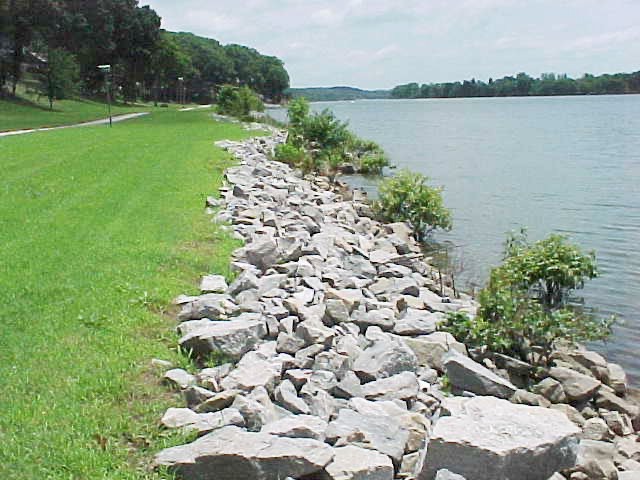
What riprap repair involves
Riprap is the layer of heavy, angular rock set along a shoreline to take the punch of the waves and hold the soil bank in place. It holds up well, but it isn't something you set and forget. Year after year, ice, wave action, boat wake, and runoff work the rock loose, open up gaps, and pull stone down the slope.
Once a gap opens up, water gets at the soil behind the rock and the erosion picks up speed. A few shifted stones today can turn into an undermined toe, a slumping bank, and eventually a washout that costs a lot more to fix. Repairing the riprap early puts the protection back before a small problem becomes a big one.
We start by figuring out why it failed in the first place, whether that is an undermined toe, torn or missing filter fabric, rock that was too small, or a slope built too steep. Then we fix the real cause, not just the part you can see, so the repair actually holds.
How we do it
Our step-by-step process for riprap repair.
- 1
On-site assessment
We walk the shoreline with you, find the sections that are failing, and pin down the cause, whether that is ice damage, an undermined toe, soil showing through behind the rock, or filter fabric that has torn or was never there to begin with.
- 2
Reset and regrade
We pull the shifted rock and set it aside, then regrade the bank back to a stable slope. A slope that is too steep is one of the most common reasons riprap slides in the first place.
- 3
Repair the filter layer
We repair or replace the filter fabric behind the rock. That hidden layer is what keeps the soil from washing out through the gaps between stones, and most failures trace right back to it.
- 4
Re-set the rock
We set the rock back from the toe up, keying the stones together so they lock in place, and we reuse your existing rock wherever it is still good.
- 5
Blend and finish
We blend the repaired stretch into the rock around it and tidy up the top edge and any torn-up ground, so the fix looks like it belongs there instead of a patch.
Why it’s worth doing right
A grant may cover much of this project
Shoreline work like this often qualifies for county cost-share. In Otter Tail County, native shoreline plantings can be funded up to 75% and riprap up to 50%, with comparable programs in Grant and Douglas counties, which can take a real chunk out of what you pay.
See shoreline grants by countyQuestions about riprap repair
How do I know if my riprap needs repair?
Look for gaps in the rock, soil showing through behind it, stones that have settled or slid down the slope, and fresh erosion around the edges. If you can see bare soil where rock used to be, the filter layer underneath is probably exposed, and it is worth handling before the next ice-out or big storm.
Can you reuse my existing rock?
Usually, yes. Good rock that has just shifted out of place can be reset, which keeps your material cost down. We only bring in new rock to replace stones that are too small, broken, or gone.
Will a repair last, or will it just fail again?
It lasts when the cause gets fixed. If we just stacked the rock back up and left a torn filter fabric or a too-steep slope, it would fail again. We go after the reason it failed, so the repair holds.
Do I need a permit to repair existing riprap?
Repairing or maintaining existing riprap in kind often falls under different rules than a brand-new install, but it depends on your county and how much work is involved. We will tell you what is usually expected and point you to the right office to confirm before we start.
Ready to get started?
Contact us for a free estimate on your riprap repair project.